Colorado Springs home prices have surged over the past five years, but the sticker price on a house tells only a fraction of the story. The city’s diverse geography means your total cost of ownership can vary by more than $2,200 per month depending on which neighborhood you choose—a staggering difference of over $26,000 annually. For those considering a move, understanding these hyper-local nuances is the key to avoiding costly surprises and finding the right fit in this beautiful city at the foot of Pikes Peak. In this blog post, real estate expert Barb Schlinker discusses the pros and cons of living in Colorado Springs, Colorado.
Key Takeaways
- Neighborhood is Everything: Your choice of neighborhood (e.g., Black Forest vs. Briargate) has a greater impact on your budget, commute, and lifestyle than any other single factor.
- Altitude is a Factor: The 6,035-foot elevation requires a 4-6 week physical adjustment period that new residents must plan for.
- Weather Varies by Zip Code: The city has distinct micro-climates; the west side gets significantly more snow and wind than the east side.
- Hidden Costs Exist: Wildfire insurance, HOA fees, property tax differences between school districts, and utility types (city vs. rural) can dramatically alter your monthly expenses.
- It’s a Car-Dependent City: With limited public transportation, vehicle ownership is a near necessity, impacting both budget and daily logistics.
Navigating the pros and cons of living in Colorado Springs requires looking beyond city-wide averages. The benefits include over 300 days of sunshine, exceptional outdoor recreation access with trails and national landmarks like Garden of the Gods, and a strong job market anchored by five military installations. The challenges center on a 4-6 week altitude adjustment period at 6,035 feet, growing traffic congestion on major corridors, wildfire insurance costs that can reach $2,400 annually in high-risk zones, and dramatic cost-of-living differences between neighborhoods. Your choice of neighborhood—from Black Forest to Briargate to Fountain—has a greater impact on your budget, commute, and lifestyle than any other single factor.
The Pros of Living in Colorado Springs
Colorado Springs consistently ranks as one of the best places to live in the United States, attracting new residents with its unique blend of outdoor adventure and urban amenities. The city’s appeal is rooted in tangible benefits that enhance quality of life and contribute to strong, stable property values.
Exceptional Weather and Sunshine
With over 300 days of sunshine annually, Colorado Springs offers a bright and pleasant climate that outshines even Denver. The semi-arid conditions mean low humidity, making summer highs in the mid-80s feel comfortable and enjoyable. This desirable weather has a direct impact on the real estate market, as homes with features that capitalize on the sun, such as those with southern exposure in the Briargate neighborhood, often command a premium for their passive solar heating benefits.
World-Class Outdoor Recreation Access
Living in Colorado Springs is like having a national park in your backyard. Residents enjoy immediate access to iconic landmarks like Garden of the Gods and Pikes Peak, along with a network of over 100 trails for hiking, biking, and running.
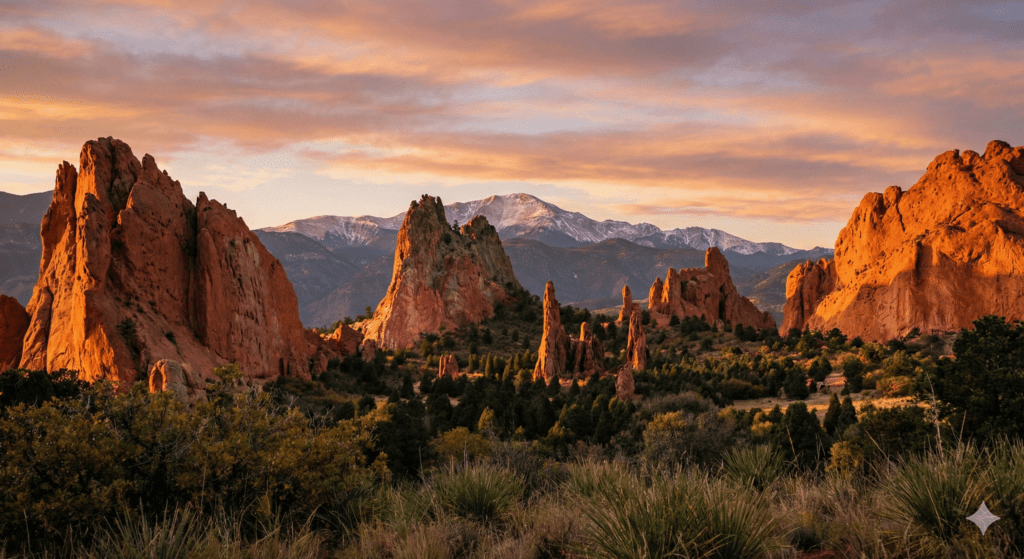
This proximity to nature is a major driver of property value. MLS data consistently shows that properties within a mile of major trailheads, such as those near Palmer Park or Red Rock Canyon, appreciate at a faster rate than comparable homes located further from these green spaces.
Strong Military Community and Job Market
The city is home to five major military installations, including Peterson Space Force Base and Fort Carson, creating a stable economic foundation. This significant military presence fuels a robust and reliable rental market, making it an attractive area for real estate investors. Beyond the military, Colorado Springs has a growing job market in the tech and healthcare sectors, with an unemployment rate that typically sits below the national average. This economic stability supports a healthy and resilient housing market.
- Major Installations: Peterson SFB, Fort Carson, Schriever SFB, U.S. Air Force Academy, NORAD.
- Economic Impact: Over 73,000 active duty members and civilian employees.
- Rental Market: Neighborhoods near bases, like Fountain and the Powers Corridor, maintain consistently high occupancy rates.
- Low Unemployment: The city’s diverse job market provides stability for homeowners.
Frequently Asked Questions
The most common mistake is underestimating the hidden costs despite the recent softening in home prices. While the market has balanced significantly into 2026, many buyers fail to budget for hyper-local variables like higher property taxes in top districts (like D20), the rising cost of wildfire insurance in hillside communities, or the expense of maintaining wells in rural areas like Black Forest.
Yes, it remains a top tier family-friendly city with abundant parks and outdoor access. However, school quality varies by district. School District 20 (D20) in the north and District 12 (D12) in the southwest are consistently top-ranked. Families should prioritize researching school boundaries, as housing inventory is often tighter and more competitive in these specific zones compared to the rest of the city.
Traffic has increased alongside population growth, though it is not yet at Denver levels. The primary congestion points are Powers Boulevard, Academy Boulevard, and Woodmen Road during rush hours. With limited public transit options, east-to-west commutes (e.g., from Falcon to downtown) can take 45+ minutes during peak times, making proximity to work a key factor in choosing a neighborhood.
The Cons of Living in Colorado Springs
While the city offers an exceptional quality of life, prospective residents should be aware of several challenges. These factors can impact everything from your health and daily commute to your monthly budget, and understanding them is crucial for a smooth transition.
The Altitude Adjustment Period
The city’s 6,035-foot elevation means there is about 20% less oxygen in the air than at sea level. Nearly every new resident experiences an adjustment period that can last from four to six weeks. During this time, it is common to experience symptoms like headaches, fatigue, and shortness of breath.
From a real estate perspective, it’s often advised that buyers relocating from sea level should schedule their primary home-hunting trips for after they’ve had at least a few weeks to acclimate, as decision-making clarity can be affected during the initial adjustment phase.
Growing Traffic Congestion
As Colorado Springs has grown, so has its traffic. Since 2020, traffic volumes have increased significantly, particularly along major arteries like Powers Boulevard, Woodmen Road, and Academy Boulevard. This has a tangible effect on real estate choices. For example, homes in eastern areas like Falcon and Peyton are often more affordable, but this comes at the cost of a longer commute. A resident might sacrifice 30-45 minutes each way, which adds up to hundreds of hours per year.
Wildfire Risk and Insurance Costs
Much of Colorado Springs lies within the Wildland-Urban Interface (WUI), an area where homes and natural vegetation meet. This proximity creates a significant wildfire risk, a lesson learned from past events like the Waldo Canyon and Black Forest fires. This risk translates directly into higher homeownership costs.
- High-Risk Zones: Neighborhoods like Black Forest, Mountain Shadows, and Peregrine face the highest risk.
- Insurance Premiums: Homeowners in these areas can pay up to $2,400 annually for wildfire insurance.
- Low-Risk Zones: Areas like Briargate and the Powers Corridor have much lower premiums, often around $800 per year.
- Financial Impact: This $1,600 annual difference is a critical factor in calculating a home’s true affordability.
“Brown Season” and Hail Risk
While summers are green and vibrant, the landscape from late fall to late spring is often brown and dormant, which can be a surprise to those expecting evergreen mountain scenery year-round.
More critically, the city’s northeast quadrant lies in what is known as “Hail Alley.” This area experiences frequent and sometimes severe hailstorms during the summer months. For homeowners, this means a higher likelihood of roof and vehicle damage, making Class 4 impact-resistant shingles a wise, albeit costly, investment.
Cost of Living Reality: Why Your Neighborhood Determines Your Budget
The often-cited median home price for Colorado Springs is deeply misleading because it masks the dramatic financial differences between its neighborhoods. A home in the rustic, spacious Black Forest community carries a completely different set of costs than a similarly sized house in the military-friendly suburb of Fountain. The difference in total monthly ownership costs can be over $2,200, proving that your neighborhood choice—not the city average—is the single most important factor for your budget.
Black Forest, with its large lots and rural setting, requires homeowners to manage private wells, septic systems, and propane tanks for heat, adding hundreds to monthly utility bills. In contrast, a home in Briargate connects to city utilities for a fraction of the cost.
Furthermore, property taxes vary significantly based on the school district. A home zoned for the highly-rated Academy District 20 will have a noticeably higher tax bill than an equivalent property in a different district. These hidden costs, from wildfire insurance in the west to HOA fees in planned communities, are what truly define affordability.
| Neighborhood | Median Price | Property Tax (Annual) | Monthly Utilities (Avg) | Commute to Peterson SFB | Total Monthly Cost |
|---|---|---|---|---|---|
| Black Forest | $850,000 | $6,500 | $600 | 40 min | $5,200 |
| Briargate | $600,000 | $5,200 | $300 | 25 min | $3,600 |
| Old Colorado City | $550,000 | $4,800 | $280 | 35 min | $3,300 |
| Powers Corridor | $480,000 | $4,000 | $250 | 15 min | $2,900 |
| Fountain | $400,000 | $3,500 | $230 | 20 min | $2,450 |
Weather Micro-Climates: Why Your Zip Code Determines Your Winter
The idea of “Colorado Springs weather” is a generalization. The city is a patchwork of micro-climates where the weather you experience can change dramatically just by driving 15 minutes across town. The most significant difference is between the west side, nestled against the mountains, and the east side, which stretches out toward the plains. This geographical divide creates two very different winter experiences for residents.
The west side, including areas like Old Colorado City and Manitou Springs, receives the brunt of mountain-effect weather. This means more snow—often 65 inches or more annually—and the infamous Chinook winds that can bring powerful gusts.
Conversely, eastern neighborhoods like the Powers Corridor and Briargate receive far less snow, typically averaging around 35-45 inches. This variance has practical implications for daily life.
- 4WD Necessity: A four-wheel-drive vehicle is highly recommended for residents in Black Forest or on the west side, where roads can be steep and snow removal is slower. It is less of a necessity in Briargate or Fountain.
- Hail Risk: The northeast section of the city, including parts of Briargate and Powers, is nicknamed “Hail Alley” due to the high frequency of summer hailstorms that can damage roofs and cars.
- Wind Exposure: West-side neighborhoods are more exposed to high winds coming off the mountains.
- First Winter Costs: A resident in Black Forest might budget for a whole-home generator and snow tires, while someone downtown may only need a good shovel.
The Altitude Adjustment Timeline: What to Expect at 6,035 Feet
Adjusting to the high altitude of Colorado Springs is a physiological process that takes time. For the first several weeks, your body works to produce more red blood cells to carry oxygen more efficiently. Understanding this timeline can help you manage expectations and make your transition smoother. Most people follow a predictable pattern of acclimation over their first six weeks.
The first two weeks are typically the most challenging. Symptoms like headaches, unusual fatigue, shortness of breath, and disrupted sleep are common. The most important things you can do during this phase are to hydrate relentlessly—aiming for over 100 ounces of water a day—and limit physical exertion to light activities like walking.
During weeks three and four, most people feel a significant turning point as symptoms begin to fade and energy levels return. This is when your body’s red blood cell production starts to ramp up.
By weeks five and six, you should feel close to normal. You can typically resume your full exercise routine, though you may still notice some breathlessness during intense exertion. At this stage, your body has produced roughly 20% more red blood cells to compensate for the thinner air. After six weeks, most transplants report feeling fully acclimated and can enjoy all the physical activities the region has to offer without significant altitude-related side effects.
About the Colorado Springs Real Estate Authority: Barb Schlinker

With over 15 years of dedicated experience in the Colorado Springs real estate market, Barb Schlinker has established herself as a leading authority on relocation and neighborhood dynamics. She has successfully guided over 400 families through the complexities of moving to the Pikes Peak region, providing invaluable insights into the true costs and lifestyle variations from Black Forest to Fountain. Barb holds certifications as a Certified Relocation Professional (CRP) and Military Relocation Professional (MRP), underscoring her specialized expertise in serving the unique needs of both corporate and military families transitioning to the area. Her data-driven approach, which focuses on analyzing hyper-local market trends, ensures her clients make informed decisions that align with their financial goals and lifestyle aspirations. When you need expert guidance grounded in years of local experience, Barb Schlinker and her team are the trusted choice.
Stay connected with the latest Colorado Springs real estate insights. Follow us on social media!
Facebook | Instagram | LinkedIn | YouTube
